
Visual Pioneers Studio Service 02 of 06
Visiting Card& Letterhead
The two pieces of paper that introduce you when you are not in the room — set to sizes your printer already stocks.
Anatomy of a visiting card
Three lines matter on every card we set. The outer edge is bleed — 3 mm of extra background that gets cut away. The middle is the trim, where the blade should land. The inner is the safe area; anything closer to the edge risks being sliced.
Cutting machines drift by a millimetre or so through a stack of 1,000. Setting all three lines is what keeps your phone number off the floor.
What youget
One system, set once, reprinted for years.
- Card front and back at 89 × 54 mm with 3 mm bleed
- Letterhead on A4, 210 × 297 mm, with a print-safe margin
- Envelope artwork — DL 220 × 110 mm — when you need it
- A matching Word or Google Docs letterhead for everyday typing
- Name and designation variants for everyone in the office
- Bilingual setting — English with Gujarati or Hindi
- Press-ready PDF with crop marks, bleed and CMYK conversion
- Editable CDR source, so a reprint never starts from scratch
Finishes worth asking for
What the extra money actually buys at the press.
- LaminationMatt feels expensive and will take a pen. Gloss is cheaper and hides thumb marks. Decide before we set the artwork — matt dulls bright colour noticeably.
- Spot UVGloss varnish on chosen areas over a matt card. It works on a logo or a single rule. It does not work on small text.
- Foil stampingMetallic gold, silver or coloured foil, pressed with a heated block. Needs its own block made, so allow extra days and a minimum quantity.
- Emboss and debossDetail raised or pressed into the card. It reads by touch and can be done with no ink at all, which is often the most restrained option.
- Round corners and edge paintBoth are done after cutting. Round corners need the safe area pulled in a little further, so tell us at the start.
- Card size
- 89 × 54 mm
- Letterhead
- A4 — 210 × 297 mm
- Bleed
- 3 mm all round
- Stock
- 300–400 gsm
How stationery gets set
01
Content
Every name, designation, number and address, spelled exactly as it should print. This is the step that causes reprints.
02
Layout
The card first, because it is the hardest. The letterhead and envelope then follow its grid.
03
Proof
A PDF at actual size for you to check spelling and spacing before anything reaches the press.
04
Press files
CMYK, bleed, crop marks, and fonts converted to curves so nothing reflows on someone else’s machine.
Work of this kind
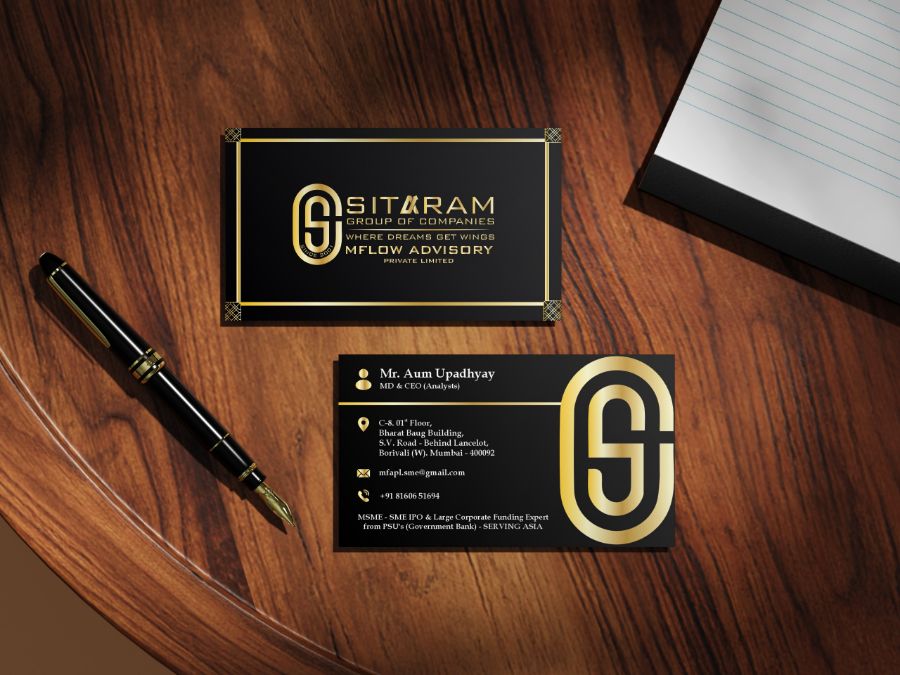
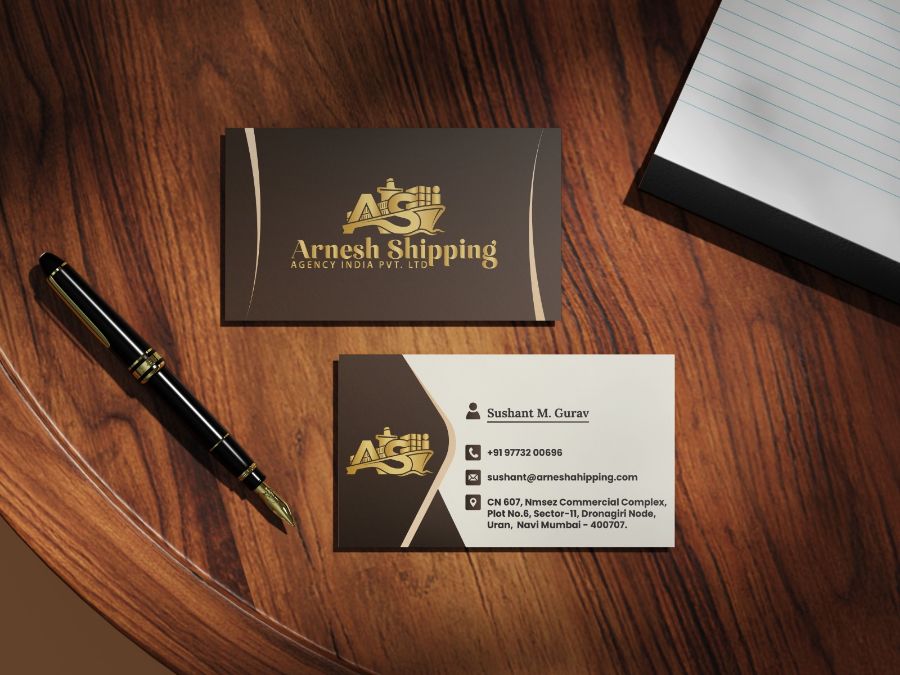
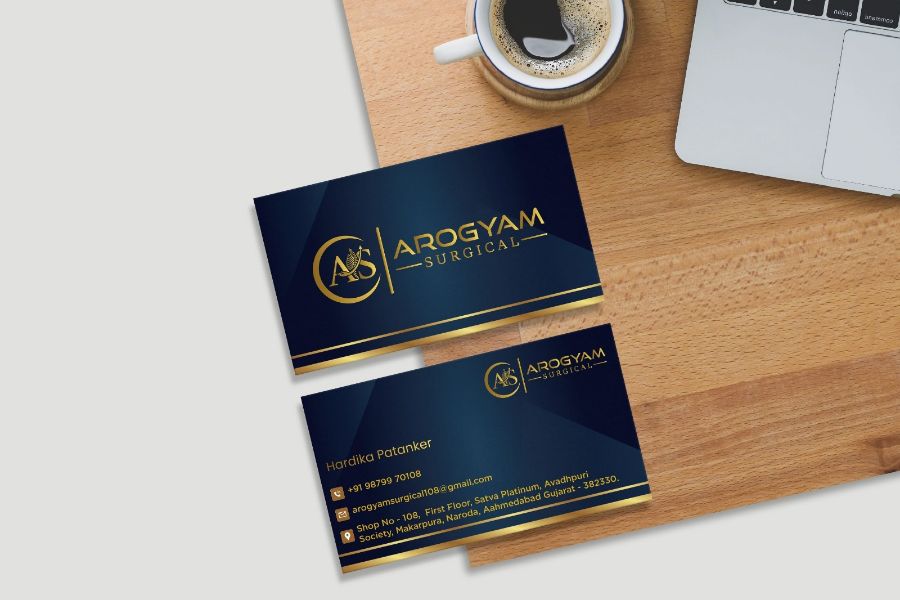
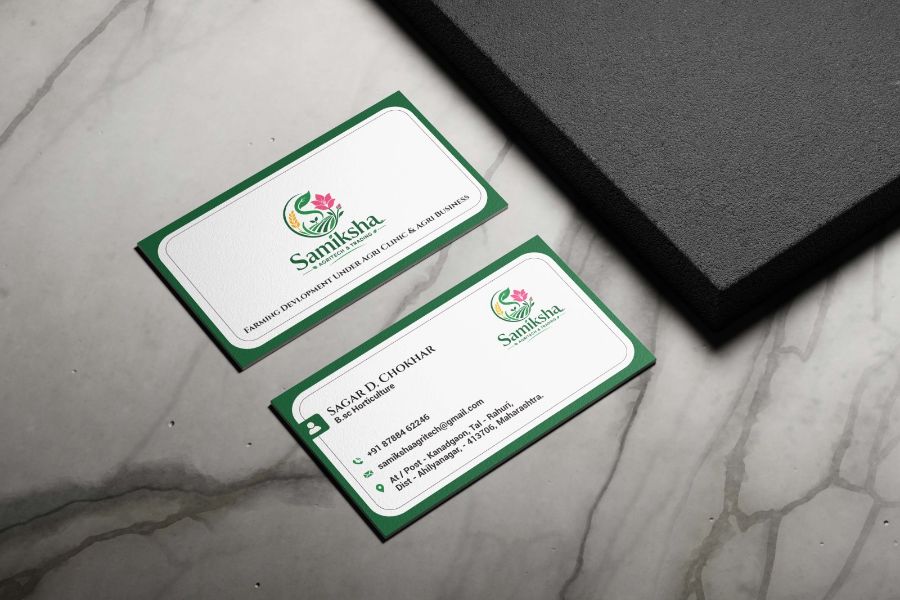
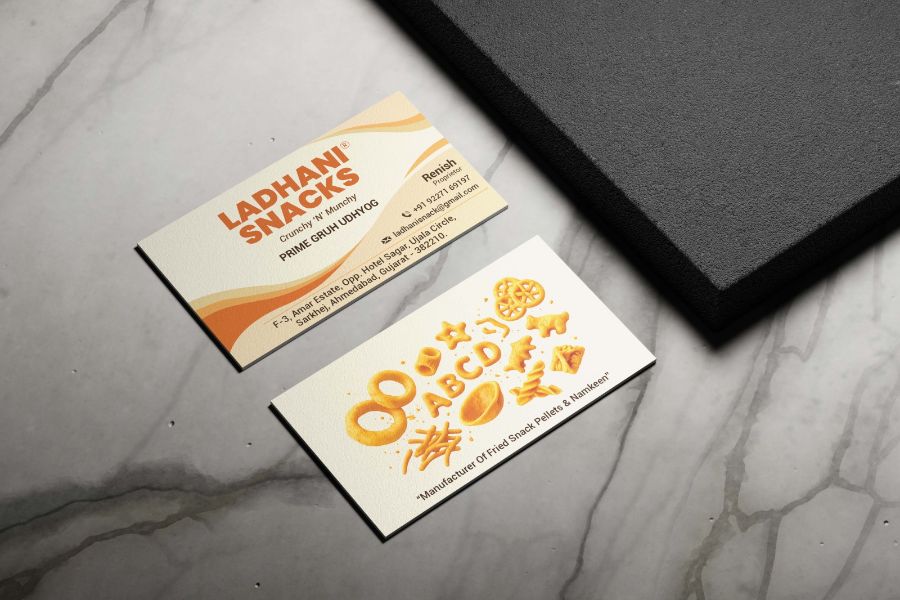
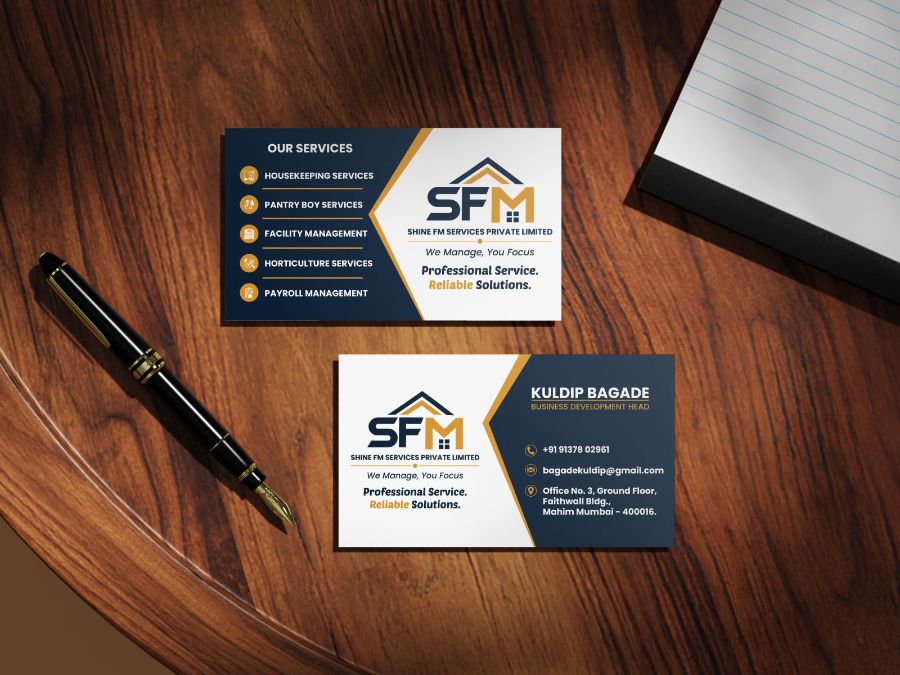
Printed,and out there
Questionswe get asked
Cutting machines drift by a millimetre or two through a stack. Bleed is 3 mm of extra background extending past the cut line, so a slight drift still leaves your colour running to the edge instead of a thin white sliver down one side.
Yes, on one side or across both. You proofread the translated text before it goes to press — we set it, but the wording is yours to confirm.
We are a design studio. You get press-ready files, and we can point you at printers in Ahmedabad we have worked with. You deal with them and pay them directly, which usually works out cheaper for you.
As many as you need. The layout gets built once and then set per person. Adding someone six months later is a small job, not a new design.
If it is vector, it scales to any size without losing quality. If all you have is a JPG, it will blur — that is usually the moment to get the mark redrawn properly.
Cards thatget kept,not binned.
Bring the names. We will bring the grid.